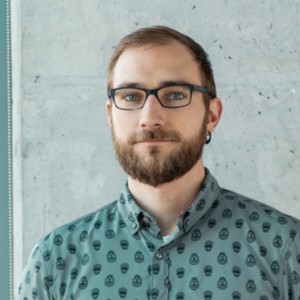
👋 Hey, glad you're here. I'm Alexandra, a senior UX researcher based in the SF Bay Area.
3.0 — watercolor wake
Senior UX Researcher/Manager
9+ Years
100+ Studies
1000+ Participants
👋 Hey, glad you're here. I'm Alexandra, a senior UX researcher based in the SF Bay Area.
I lead strategic research in complex systems where trust is the product: security, privacy, and now AI.

Trained in experimental science, I bring a lab scientist's rigor to a very human question: what experience should we build, and why?


I shape trustworthy AI experiences by uncovering how people form and calibrate trust, understand system behavior, and decide when to take control.
trust calibration & explainability
I design studies that reveal how people assess, interpret, and build appropriate trust in AI systems.
I uncover how users form mental models of complex systems—and where those models break down.
I explore how people decide when to rely on, override, or opt out of AI—and what helps them feel in control.
I lead iterative research to define scalable UX architecture when complex product systems outgrow their legacy structure.
product systems & convergence
Foundational and concept-validation research as Express folded into the new Shopping tab.
Converged four standalone products into one coherent app, with mental model research defining the unified structure.
Untangled task flows, navigation, and information structures in a fragmented enterprise console into one actionable system.
I turn ambiguous ideas into validated product direction, from early exploration through launch.
0→1 builds
Defined target users, unmet needs, value propositions, and launch experience for a net-new consumer privacy product.
A researcher who ships—from pain point to vision to working product—using the same strategy-first discipline I bring to enterprise work.
I turn fragmented customer insights into an omnichannel UX strategy that aligns XFN teams around one shared experience and product vision.
research influence
Brought stakeholders directly into research, deepening buy-in on findings and strengthening empathy for the end user.
Led multidisciplinary UX work while growing the research team from 2 to 5 and establishing more consistent research operations.
Turned years of recruiting data plus a live pipeline into a self-serve dashboard used across the Ads org.
Senior UX Researcher/Manager
9+ Years
100+ Studies
1000+ Participants
Messy, ambiguous product problems → evidence-backed strategy that shipped.
A 32-session mixed-methods mental model study that redirected company strategy away from mobile-first — and defined the modular IA behind MB5.
View studyLed the research arc behind Malwarebytes' conversational security advisor — trust in a personalized, adaptive advisor before the industry had the vocabulary for it.
View studyRedesigning Nebula from the ground up around Security Posture Assessment — card sorts to competitor IA to usability with SMB admins and MSPs.
View studyAssistive grocery shopping with Google Shopping List — end-to-end task flows, trip-tech testing, and AI personal-assistant concepts that made the list feel less like chores and more like help.
View studyFoundational and concept-validation research as Express folded into the new Shopping tab — participatory design, competitor audits, and fieldwork that shaped how shoppers browse with confidence.
View studyThe supporting research that shaped teams, ops, and product direction.
Building data-driven personas for consumer and corporate UX — the foundation later studies (and strategy bets) stood on.
A methodology case study featuring Google Shopping SRP competitor audits — when desktop research moves the needle.
Visualizing UX research recruiting at scale for Google Ads — dashboards that made a messy pipeline strategic.
Building — and knowing when to let go of — a participatory research program so more teams could sit with users.
Building Malwarebytes 5.0 — converging four standalone products into one coherent, consumer-first security experience.
Steered product vision from a personal CRM to a gifting platform with light CRM — and authored the strategy set (roadmap, launch PRD, ops plan, decision log).
Understand the system → explain the mechanism → influence direction early → make the evidence travel.
In a complex, data-heavy system, pain points rarely exist in a single dimension; solving them usually requires a set of features working in synergy.
Lately, my research has focused on system-level investigation: reconciling different products, users, workflows, and mental models into a coherent experience rather than optimizing isolated surfaces.
Once those relationships have a shared language, the architecture starts to reveal itself: what should be unified, what should remain distinct, where structural debt has accumulated, and what changes need to move as a system.
That UX architecture blueprint is where I believe research creates its highest leverage.
A finding is only as strong as the explanation behind it. I treat the first “why” as a hypothesis, then pressure-test it against competing explanations, contradictory evidence, and variables that could change the interpretation. Years of neuroscience lab research trained me to be suspicious of convenient stories.
In a complex enterprise system, a drop-off in one workflow can point to permissions, data state, terminology, navigation, or the sequence itself. I don’t stop at “users are confused.” I trace where behavior diverges, compare the surrounding conditions, and test the competing explanations until the pattern holds across both telemetry and qualitative evidence.
Research creates the most leverage before direction hardens. I invest upstream, while assumptions and decisions are still cheap to change. Working in trust and cybersecurity sharpened my instinct for de-risking: move fast when decisions are reversible; apply more rigor when the consequences aren’t. As AI makes execution cheaper and faster, that judgment matters even more.
Producing good evidence is half the job. I build the reporting rhythms, dashboards, and programs that put it in front of the people whose decisions it should change. Research scales when evidence travels, not when everyone is asked to become a researcher.